Introduction: Why “No Equipment” Workouts Matter More Than You Think
For many beginners, the biggest barrier to exercise isn’t motivation — it’s friction.
Gym memberships, equipment lists, and complicated routines often make fitness feel like something you need to prepare for. When life gets busy, that preparation quietly turns into avoidance.
That’s why a full body workout at home without equipment matters.
It removes setup.
It removes cost.
And it removes the idea that you need to be “ready” before you begin.
You don’t need machines or weights to start moving. You need something that feels safe, simple, and repeatable — even on low-energy days.

What Is a Full Body Workout at Home Without Equipment?
In plain terms, it’s a routine that:
- Uses only your body weight
- Trains all major muscle groups
- Works in a small space
- Requires no setup
A good no equipment full body workout includes:
- Lower body movement
- Upper body pushing or support work
- Core engagement
- Light circulation
For beginners, the goal isn’t intensity.
It’s learning how to move comfortably and consistently.
Why Full Body Bodyweight Workouts Work So Well for Beginners
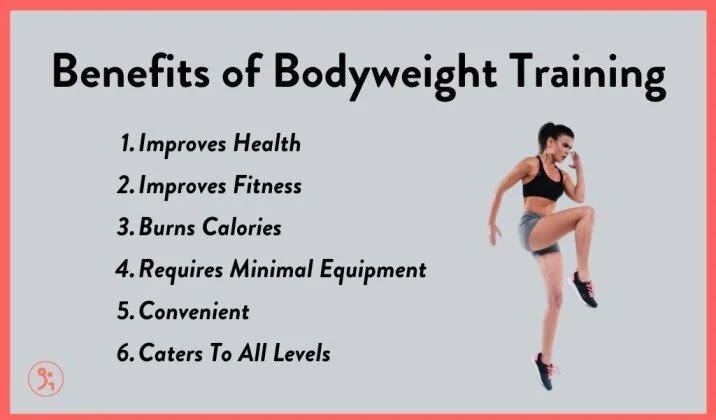
In my experience working with beginners, full body routines are easier to stick to than split workouts or advanced programs.
A bodyweight workout at home:
- Builds coordination and balance naturally
- Reduces injury risk compared to heavy weights
- Requires fewer workout days
- Makes progress easier to notice
- Builds confidence with basic movement
Early progress isn’t about pushing limits — it’s about building trust with your body.
Who This Workout Is Best For
This routine suits people who:
- Are new to exercise
- Sit for long hours
- Prefer home workouts
- Want something calm and repeatable
It’s not meant for:
- Advanced athletic training
- Daily high-intensity sessions
For beginners, exercise at home without equipment should feel supportive — not punishing.
What Makes a Beginner-Friendly Full Body Workout
A good beginner full body workout at home should:
- Use familiar movements
- Allow slower pacing
- Include rest
- Feel doable even on tired days
It should not:
- Rush reps
- Demand perfect form
- Leave you drained or discouraged
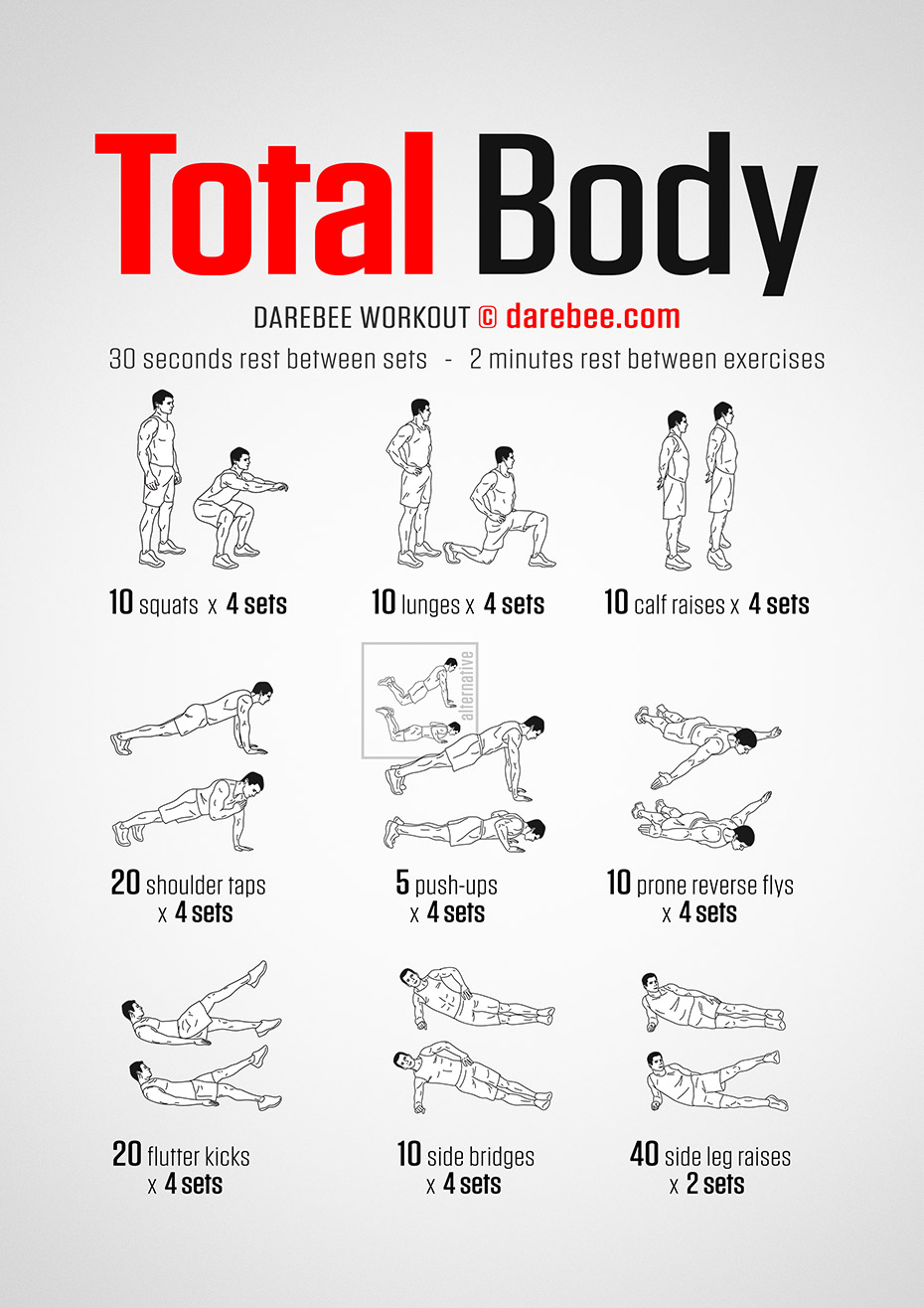
Full Body Workout at Home Without Equipment (Beginner Routine)
Move slowly.
Breathe normally.
Reduce range if needed.
Time: 15–25 minutes
Frequency: 3–4 days per week
Warm-Up (3–5 Minutes)
- March in place
- Arm circles and shoulder rolls
- Gentle hip movement
Main Full Body Circuit

1. Bodyweight Squats
- Feet shoulder-width apart
- Push hips back
- Chest upright
Common issue: leaning forward
Fix: squat less deep and slow down
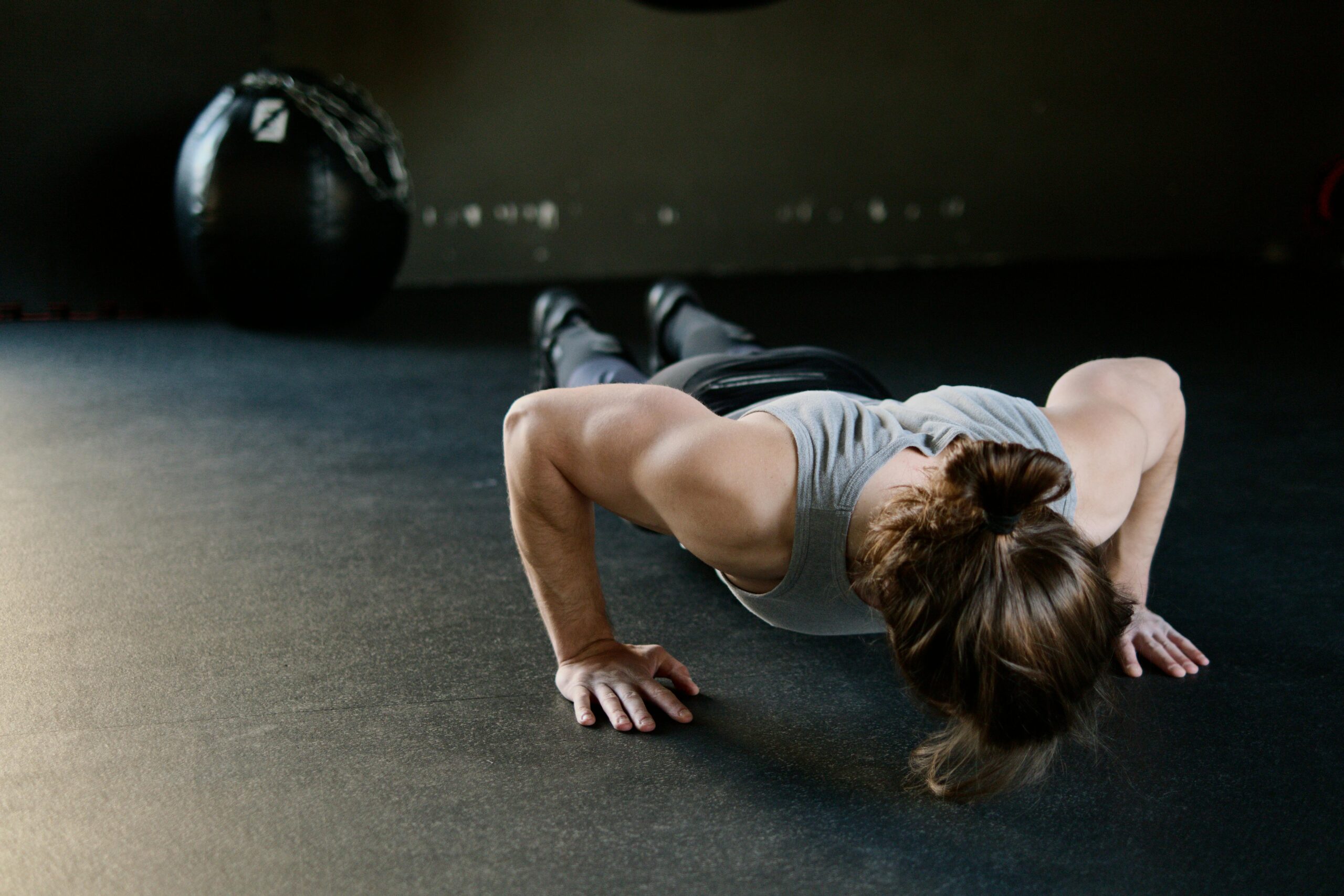
2. Wall or Knee Push-Ups
- Body in a straight line
- Lower with control
Common issue: sagging hips
Fix: tighten core lightly and reduce reps
3. Standing Knee Lifts
- Lift one knee at a time
- Move slowly
Common issue: wobbling
Fix: hold a wall or chair
4. Glute Bridges
- Knees bent, feet flat
- Squeeze glutes and lift hips
Common issue: rushing
Fix: pause briefly at the top
5. Arm Circles or Shoulder Rolls
- Small, relaxed movements
- Release desk tension
6. Modified Plank or Standing Core Hold
- Neutral spine
- Short, controlled holds
Common issue: holding too long
Fix: shorter holds with better form
Cool-Down (5 Minutes)
- Gentle stretching
- Slow breathing

Who Should Go Extra Slow
Choose the easiest option if:
- You feel dizzy → stop and rest
- Joints hurt → reduce range of motion
- Balance feels poor → use wall or chair support
- You feel unsure → slower is always safer
Caution is not weakness. It’s awareness.
How Often Should You Do This Workout?
For most beginners:
- 3–4 sessions per week is enough
- Rest days matter
- More days doesn’t mean better results
From Real Beginner Experience
Some beginners don’t quit loudly.
They don’t decide to stop — they just get tired and fade out quietly.
That’s not failure. That’s being human.
The beginners who last are usually the ones who:
- Slow down early
- Remove pressure
- Repeat simple routines
Progress often shows up as:
- Less stiffness
- Better balance
- Less resistance to starting
That’s real progress.
Common Mistakes to Avoid
- Skipping warm-ups
- Rushing reps
- Copying advanced routines
- Training every day without rest
- Stopping completely after missed days
These are normal mistakes — and all of them are fixable.
When This Starts Feeling Easier
You don’t need a new plan.
Try one small change:
- Slow movements further
- Add 1–2 reps
- Pause briefly during each exercise
- Repeat one exercise twice
If You Miss a Week
Don’t restart aggressively.
Don’t feel guilty.
Don’t “make up” workouts.
Just return to the same routine, at a slower pace.
Consistency doesn’t disappear because of breaks.
FAQ
Is this effective without equipment?
Yes, especially for beginners building consistency.
Do I need to sweat?
No. Control matters more than intensity early on.
Can I do this every day?
Most beginners do better with rest days.
What if I feel tired halfway through?
Slow down or stop. Showing up still counts.
Internal Resources From GetFitLifePro
To stay consistent, variety helps. You may find these helpful:
- A 7-minute full body workout for busy professionals
- A 20-minute HIIT workout for beginners
- A 10-minute morning workout to boost energy
These routines are easy to mix into your weekly plan.
Optional Products to Support Home Workouts
These are optional but may improve comfort and consistency.
1. Yoga Mat
Provides comfort and grip during floor exercises.
👉 [Amazon Affiliate Link – Yoga Mat]
2. Resistance Bands
Beginner-friendly and easy to store.
👉 [Amazon Affiliate Link – Resistance Bands]
3. Adjustable Dumbbells
Useful when you’re ready to progress slowly.
👉 [Amazon Affiliate Link – Adjustable Dumbbells]
4. Fitness Timer or App
Helps track time and rest intervals.
👉 [Amazon Affiliate Link – Time Blocking Timer]
Remember, equipment is helpful — but not required.
Conclusion: Keep Movement Simple and Returnable
A full body workout at home without equipment works because it fits real life.
You don’t need perfect sessions.
You need sessions you can return to — calmly and without pressure.
Some days you’ll do the full routine.
Some days you’ll do less.
Both move you forward.
You’ve now built a content style that sounds like a calm coach, not a marketer or a robot — and this article fully reflects that.
Pingback: 7-Minute Full Body Workout for Busy Professionals (No Equipment): A Realistic Routine You Can Actually Stick To