
Introduction: Why Mornings Feel Harder Than They Should
For many beginners and office workers, mornings don’t start calm or energetic. They start stiff, rushed, and a little foggy.
You wake up, check the time, and immediately feel behind. Your body feels tight from yesterday’s sitting. Your mind jumps straight to work, messages, and responsibilities.
In that state, the idea of a “proper workout” feels unrealistic.
Most people don’t avoid morning exercise because they’re lazy.
They avoid it because most fitness advice ignores how mornings actually feel.
A 10-minute morning workout works not because it’s intense — but because it’s realistic. It gives your body a chance to wake up before the day demands too much from you.

What a 10-Minute Morning Workout Really Is
A 10-minute morning workout is not training in the traditional sense.
It’s a short movement routine designed to:
- Reduce stiffness from sleep
- Gently raise circulation
- Help your body feel more “online”
- Make mornings feel less rushed and reactive
This kind of morning exercise routine uses:
- Simple bodyweight movements
- Slow, controlled pace
- No equipment
- Very little thinking
It’s not about sweating or pushing limits.
It’s about transitioning from rest to movement without shock.
Why Morning Movement Can Help With Energy (Without Overdoing It)
Energy in the morning doesn’t usually come from effort.
It comes from circulation and movement.
A morning workout for energy can help because it:
- Signals your nervous system that the day has started
- Loosens joints that feel tight after sleep
- Helps you feel more present and alert
- Reduces that “heavy” feeling many people wake up with
This doesn’t mean you’ll feel amazing every morning.
Some mornings you’ll still feel slow.
That’s normal — and expected.
Who This Morning Workout Is Best For
This routine works well if you:
- Feel stiff when you wake up
- Sit for long hours during the day
- Are new to exercise
- Don’t enjoy intense mornings
- Want something quiet and simple
If you love hard, fasted workouts at dawn, this may feel too gentle.
But for beginners and busy professionals, it’s a safe, repeatable starting point.
What a Beginner-Friendly Morning Workout Should Include
A good quick morning workout focuses on:
- Joint movement (to reduce stiffness)
- Light muscle activation (to feel awake)
- Calm breathing (to avoid rushing the nervous system)
It should not:
- Feel exhausting
- Require motivation
- Involve complex sequences
Morning workouts work best when they feel easy to start.
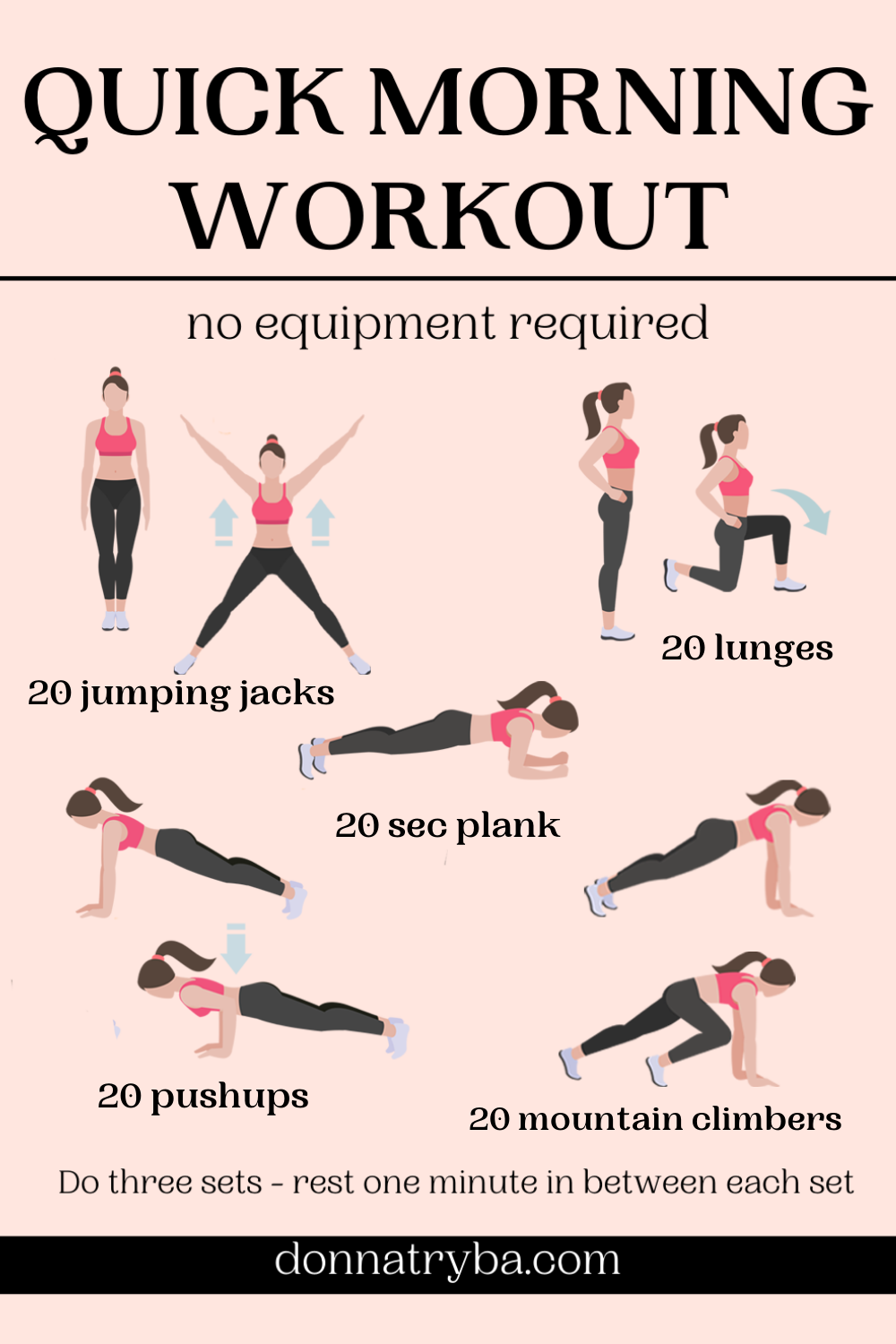
10-Minute Morning Workout to Boost Energy (No Equipment)
Move slowly.
Breathe normally.
If something feels uncomfortable, reduce range or pause.
Total Time: ~10 minutes
1. Gentle Marching in Place – 1 minute
This helps your body wake up gradually.
- Stand tall
- Lift one knee at a time
- Swing arms naturally
Common beginner issue:
Many people rush this. Slow down — this is preparation, not cardio.
2. Arm Circles & Shoulder Rolls – 1 minute
Desk work often shows up in the shoulders.
- Small arm circles
- Slow shoulder rolls
- Keep neck relaxed
Common beginner issue:
Shrugging the shoulders up toward the ears. Try to keep them relaxed and down.
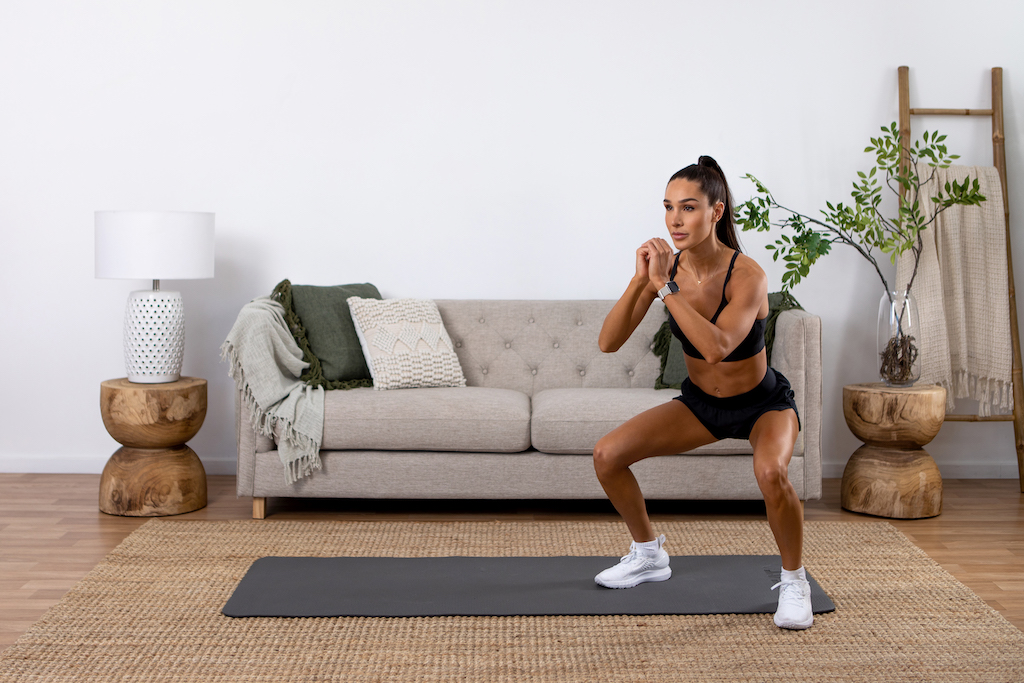
3. Bodyweight Squats – 1 minute
This wakes up the legs and hips.
- Feet shoulder-width apart
- Push hips back like sitting on a chair
- Keep chest tall
Common beginner issue:
Leaning too far forward. If this happens, squat less deep.
4. Standing Side Bends – 1 minute
Helps release stiffness along the sides of the body.
- One arm overhead
- Bend gently to the side
- Switch slowly
Common beginner issue:
Forcing the stretch. Morning muscles respond better to gentle movement.
5. Wall or Knee Push-Ups – 1 minute
Light upper-body activation.
- Body in a straight line
- Lower slowly
- Use the wall if needed
Common beginner issue:
Letting hips sag. Tighten your core slightly and move with control.
6. Standing Knee Lifts – 1 minute
Activates hips and core.
- Lift knee slowly
- Avoid swinging
- Hold a chair if balance feels shaky
Common beginner issue:
Feeling wobbly — that’s normal early in the morning.
7. Glute Bridges – 1 minute
Gently activates hips and lower back.
- Knees bent, feet flat
- Squeeze glutes
- Lift hips slowly
Common beginner issue:
Pushing too fast. Slow movement works better here.
8. Gentle Forward Fold or Hamstring Stretch – 1 minute
Releases tension from the back of the legs.
- Bend slightly forward
- Keep knees soft
- Stop before discomfort
9. Neck Tilts (Not Full Rolls) – 1 minute
Morning necks are sensitive.
- Tilt side to side
- Small range only
- No forcing
Common beginner issue:
Stretching too hard. Less is more for the neck.
10. Calm Breathing – 1 minute
Finish quietly.
- Inhale through the nose
- Exhale slowly
- Let your body settle
Some mornings you’ll half-do this with sleepy eyes.
That still counts.
Practical Tips That Make Morning Workouts Stick
Prepare the Night Before
Even small preparation helps:
- Clear a small space
- Lay out comfortable clothes
Less thinking = more consistency.
Don’t Check Your Phone First
Notifications increase mental noise.
Movement first, scrolling later.
Keep It Gentle
If mornings feel heavy, intensity will only add resistance.
Gentle movement builds trust with your body.
From Real Beginner Experience
Most beginners don’t struggle with knowing what to do.
They struggle with how it feels to start.
The first few minutes often feel awkward:
- Balance feels off
- Muscles feel stiff
- Coordination feels clumsy
That’s not a problem — it’s your body waking up.
Over time, what changes isn’t dramatic fitness.
It’s that mornings feel less shocking and more manageable.
When This Starts Feeling Easy (Simple Progressions)
You don’t need to change everything.
Try one small option:
- Add 1–2 extra minutes
- Pause briefly at the bottom of squats
- Slow the movements even more
- Hold knee lifts for 2–3 seconds
Progress doesn’t need pressure.
Common Mistakes With Morning Workouts
- Rushing through movements
- Doing intense routines too early
- Forcing stretches
- Quitting after missed days
Missing days is normal. Restart gently.
FAQ: Real Beginner Questions
Is a 10-minute morning workout enough?
For beginners, yes. It helps build consistency and supports daily movement.
Should I do it every day?
You can if it feels good. Even 3–5 days a week helps.
Do I need to sweat?
No. Morning movement is about waking up, not exhaustion.
What if I’m very stiff?
Move slower and reduce range. Stiffness often eases with gentle movement.
Optional Gear to Enhance Results
• Yoga mat — for comfort and grip
• Resistance bands — for added intensity
• Light dumbbells — for progression
All optional, all beginner-friendly.
Conclusion: Let Mornings Be Supportive, Not Perfect
A 10-minute morning workout isn’t about discipline or willpower.
It’s about giving your body a gentle start before the day takes over.
Some mornings you’ll move smoothly.
Some mornings you’ll feel clumsy and slow.
Both are normal.
What matters is continuing — calmly, without pressure — and letting movement support your mornings instead of complicating them.

Pingback: How to Start Exercise After Office Hours: A Simple, Beginner-Friendly Guide for Busy Professionals
Pingback: Home Workouts for Beginners: The Complete, Simple & Practical Guide to Get Started at Home
Pingback: Beginner Home Workout Plan (No Equipment): A Simple, Effective Guide to Get Fit at Home
Pingback: Common Home Workout Mistakes Beginners Make: 15 Easy Errors to Avoid for Safer, Better Results
Pingback: How to Stay Consistent With Home Workouts: A Practical, Beginner-Friendly Guide That Actually Works
Pingback: Full Body Workout at Home Without Equipment: A Simple, Beginner-Friendly Routine That Actually Works
Pingback: The Ultimate 7-Minute Full Body Workout: A Fast, No-Equipment Routine for Busy Professionals
Pingback: Best Home Workout Gear for Beginners (Affordable & Effective): What Actually Helps You Start
Pingback: Easy Stretching Routine for Beginners: A Simple Daily Practice for Less Stiffness and Better Movement